
CNC routing for plastic, aluminium and sheet parts
Star wheels, conveyor guides, wear strips, gears and engraved labels, cut accurately from sheet and plate. Routing is the fastest way to turn a flat drawing into a finished profile, and it is one of the things we do most.
What CNC routing is
A CNC router moves a high speed cutter across a sheet of material, following a toolpath generated from your drawing. Where a mill is built for heavy cuts in steel, a router is built for speed and reach across large flat areas, which makes it ideal for plastics, aluminium, composites and boards.
Because the cutter follows a program, profiles that would be slow or impossible to cut by hand become routine: the curved pockets of a star wheel, the fine teeth of a large plastic gear, the stepped edge of a guide rail. Holes, counterbores, chamfers and pockets can all be added in the same set-up, so the part comes off the table ready to fit.
Routing is also how we engrave. Machine labels, station plates and identification tags are cut and engraved in one operation, so the text is permanent and will not wear off in a washdown area the way a sticker would.
Parts we route
Most routed work goes onto production lines, where plastic parts handle containers and product without damaging them.
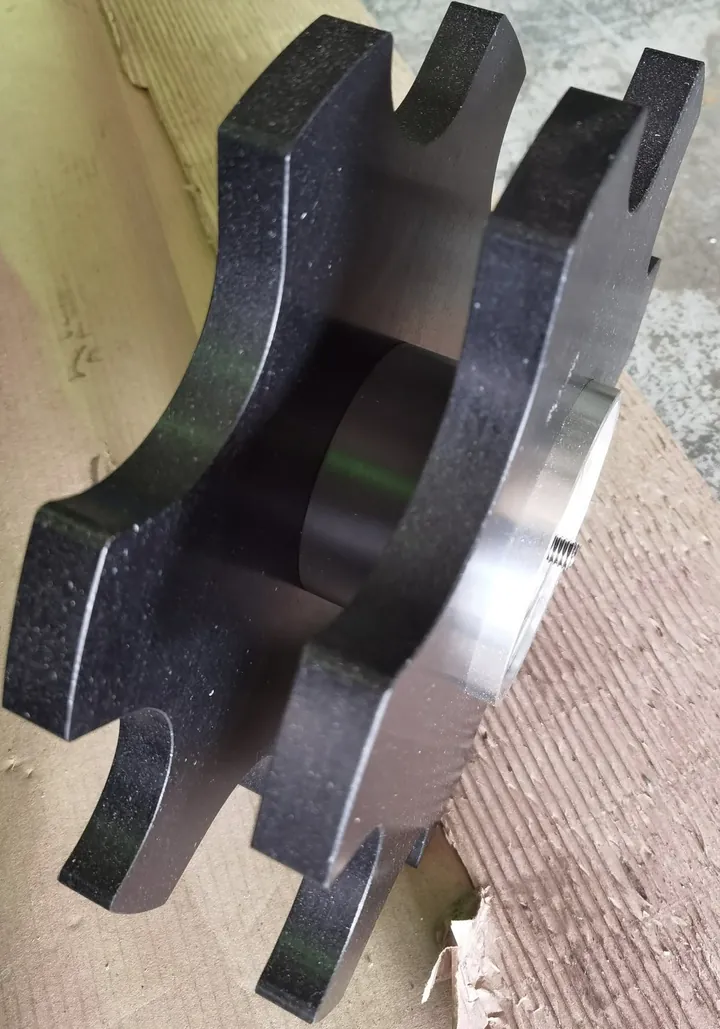
- Star wheels and timing screwsChange parts that space, transfer and position bottles and cans through fillers, cappers and labellers.
- Guide rails and wear stripsLow friction guides that keep containers and packs moving straight on conveyors.
- Plastic gears and sprocketsQuiet running gears that need no lubrication and will not contaminate product.
- Engraved labels and platesPermanent station labels, warning plates and identification tags for machines.
- Covers, panels and guardsProfiled panels and machine guarding cut from plastic sheet or aluminium plate.
- Vehicle and custom partsOne-off panels, brackets and accessories made from a drawing or a template.
Change parts for filling and packing lines
Every time a bottling or canning line switches to a new container size, the parts that touch the container have to change with it. Star wheels, guides, centre guides and timing parts are machined to the exact profile of the bottle or can, and they wear over time as millions of containers pass through them.
We cut replacement change parts from a drawing, or by measuring a worn original. Plastic star wheels are usually routed from UHMW polyethylene or phenolic laminate, with metal hubs turned and milled in the same workshop so the whole assembly arrives ready to bolt on.
The curved guide shown here is a good example of the detail that matters on a line: several routed layers bonded and bolted together so the guide holds the bottle at exactly the right height as it turns into the machine.


Engineering plastics, cut properly
Plastics behave differently from metal under a cutter. They move with heat, they can melt and smear, and some are abrasive. Getting a clean edge and an accurate profile is about the right tooling, speeds and hold-down.
- UHMW polyethylene
- Very low friction and excellent wear resistance. The standard choice for star wheels, guides and wear strips.
- Acetal (POM)
- Stiff, stable and precise. Good for gears, rollers and parts with tight fits.
- Nylon
- Tough and impact resistant, with good wear properties for rollers and bushes.
- Phenolic laminate
- Fabric reinforced and very tough. Holds up to repeated impact in demanding change parts.
- Aluminium plate
- Light, rigid plates, brackets and panels that route quickly with a clean finish.
Trays, racks and large plastic parts
Routing is ideal for big flat parts with many identical features, where every pocket has to sit in exactly the right place.
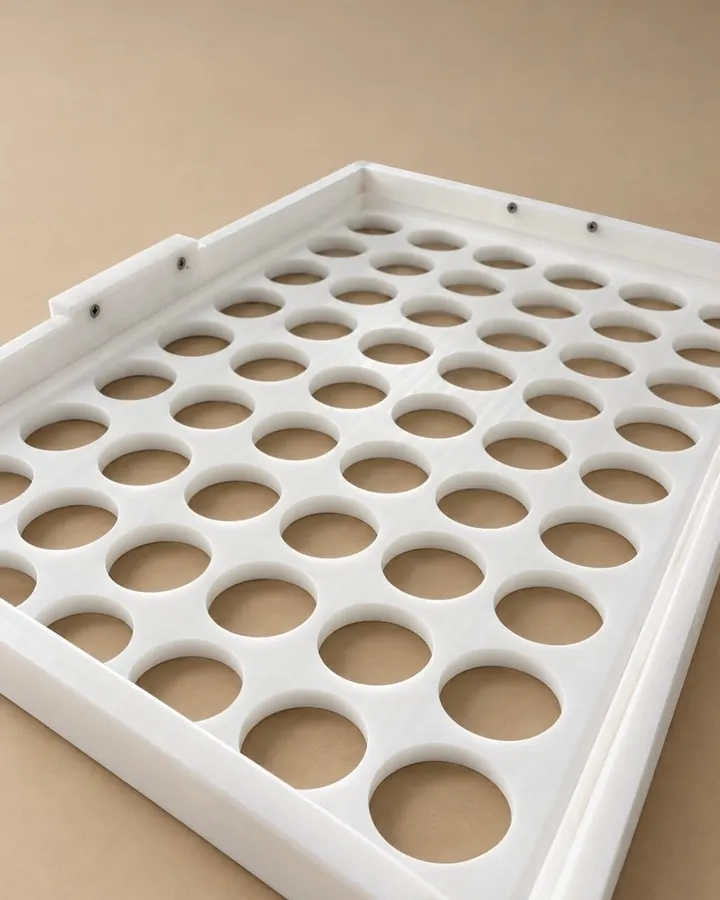

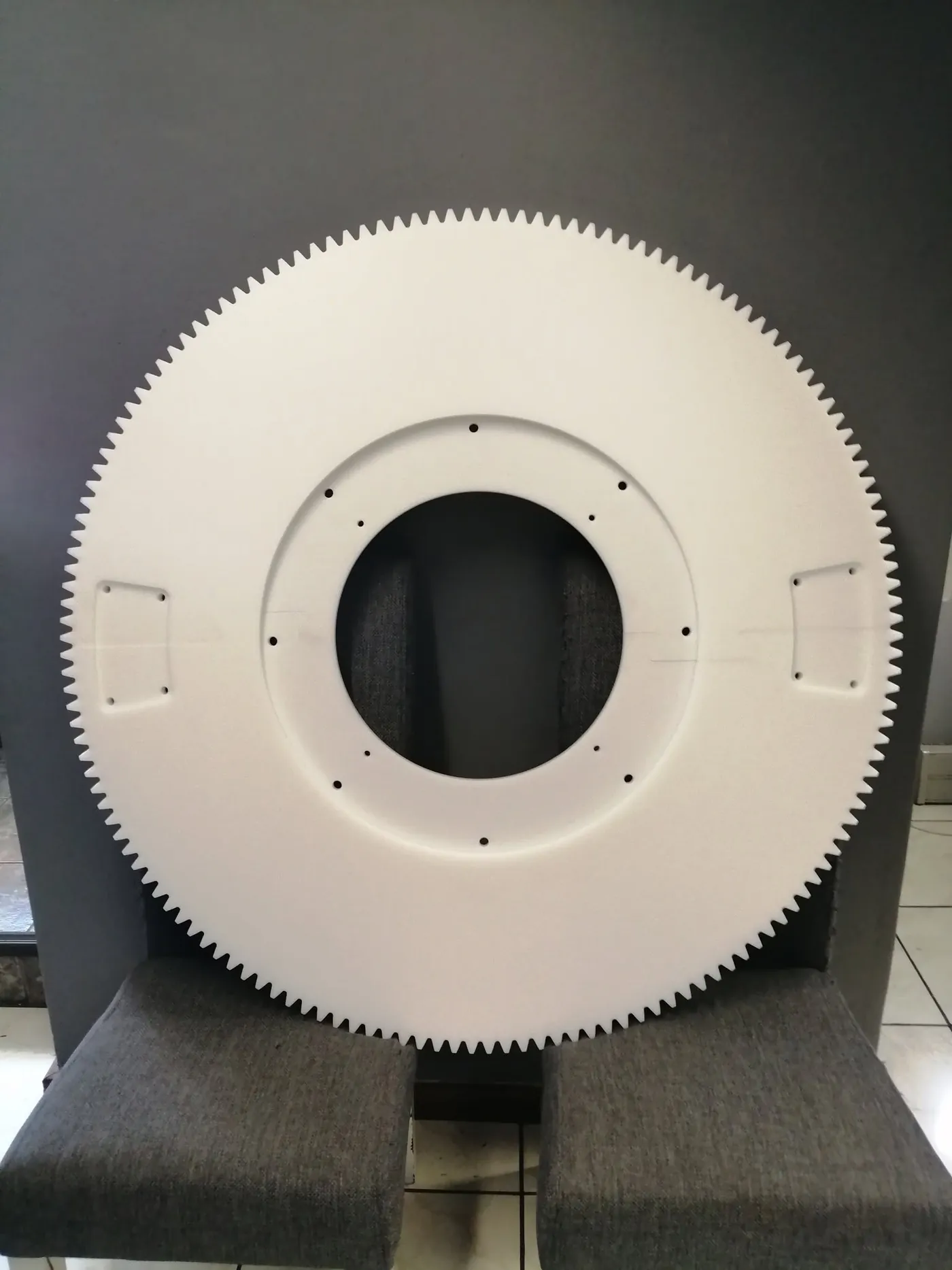
Trays and racks like this hold bottles, jars or components during filling, handling or storage. Because the router cuts every opening from the same program, the pockets line up from one tray to the next, and a replacement tray drops straight into place.
Large plastic gears run quietly, need no grease and will not mark product, which makes them common in food and packaging machinery. Cutting fine teeth accurately around a large diameter takes a stable set-up and a careful toolpath.
One-off work and custom parts
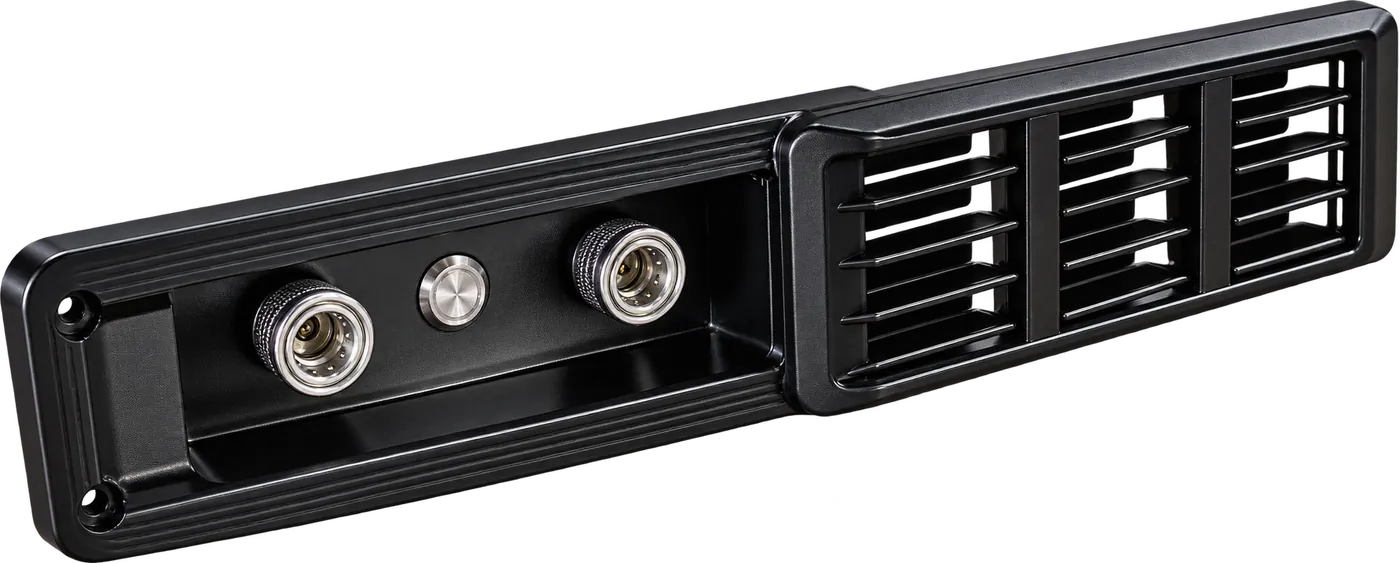
Routing is not only for production lines. This louvred panel was machined from black plastic with stainless threaded inserts, then fitted to the side of a vehicle. Custom one-offs like this start with a conversation, a template or a sketch, and end with a part that fits first time.
If you have an idea for a panel, bracket, cover or accessory, send a sketch with the main measurements and we will tell you how we would make it.

CNC routing: common questions
What files do you need for CNC routing?
A DXF or DWG file of the profile is ideal, along with a drawing showing thickness, material and any pockets or holes. A PDF drawing, a clear sketch with measurements or the worn original can also be used.
Can you copy a worn star wheel?
Yes. We can measure a worn original to recreate the profile. Sending a drawing as well, if one exists, helps us confirm the dimensions that matter most.
Which plastic should I use for star wheels and guides?
UHMW polyethylene is the usual choice for low friction and wear. Acetal suits parts that need to stay very stable, and phenolic laminate suits parts that take heavy impact. We can advise based on how the part is used.
Can you engrave text and logos?
Yes. Labels, station plates and identification tags can be engraved during routing so the text is permanent and resists washdown.
Do you route metal as well as plastic?
We route aluminium plate and other non-ferrous sheet. Thicker or harder metals are usually better suited to CNC milling, which we also do in the same workshop.
Other ways we can make it
Most parts that leave the workshop pass through more than one of these processes.
Have a drawing, a sample or a broken part?
Send it through and we will look at the best way to make it, what it will cost and how long it will take. A clear drawing helps, but a photo with a few measurements is often enough to start.