
Conventional milling for keyways, slots and modifications
Manual milling for the jobs that do not need a program: cutting a keyway, squaring up a block, adding a slot or flat, or modifying a part to suit an older machine.
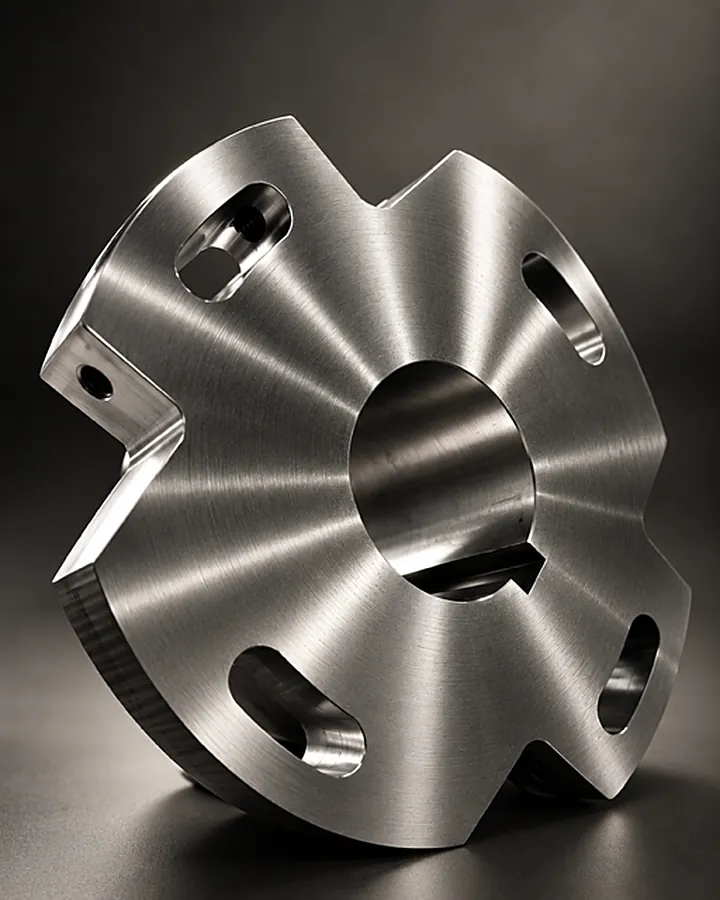
What conventional milling is for
A conventional milling machine is controlled by hand through its table and quill. In the hands of an experienced machinist it is a precise, flexible tool for straightforward features that would take longer to program than to cut.
Keyways in shafts and hubs, slots in brackets, flats for set screws, squared faces on sawn stock and simple drilled patterns are all everyday conventional milling work. So are modifications: enlarging a slot, adding a mounting hole or machining a face so that a new part fits an existing machine.
Manual milling also supports our CNC work, preparing stock and adding simple features before or after programmed operations.

Typical conventional milling work
- Keyways and keyseatsCut into shafts and hubs to suit standard or existing keys.
- Slots and stepsAdjustment slots, steps and shoulders in brackets and plates.
- Flats and facesFlats for set screws and faces machined square and true.
- Squaring stockSawn blocks and plate squared and sized ready for further work.
- ModificationsAltering existing parts so they fit, mount or work as needed.
- Drilling and tappingSimple hole patterns, drilled and tapped by hand.
Hubs, sprockets and keyed parts
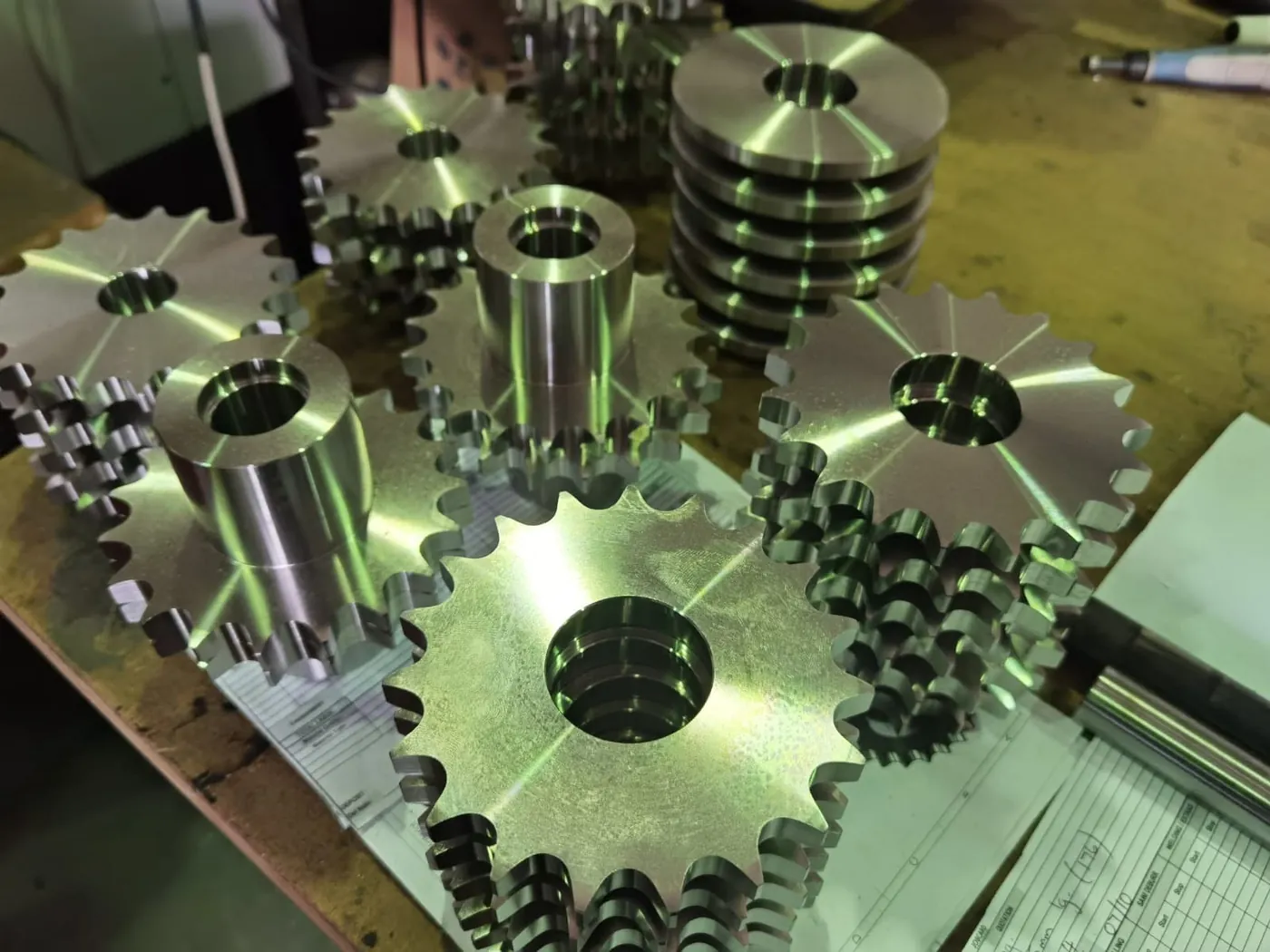
Sprockets and hubs need a keyway in the bore so they lock to their shaft. On a one-off or small set, that keyway is often cut most efficiently on a conventional machine once the part has been turned.
The sprockets and hubs below were machined as a matched set, with bores, keyways and spacers made to work together on the same drive.
Windows, slots and flats
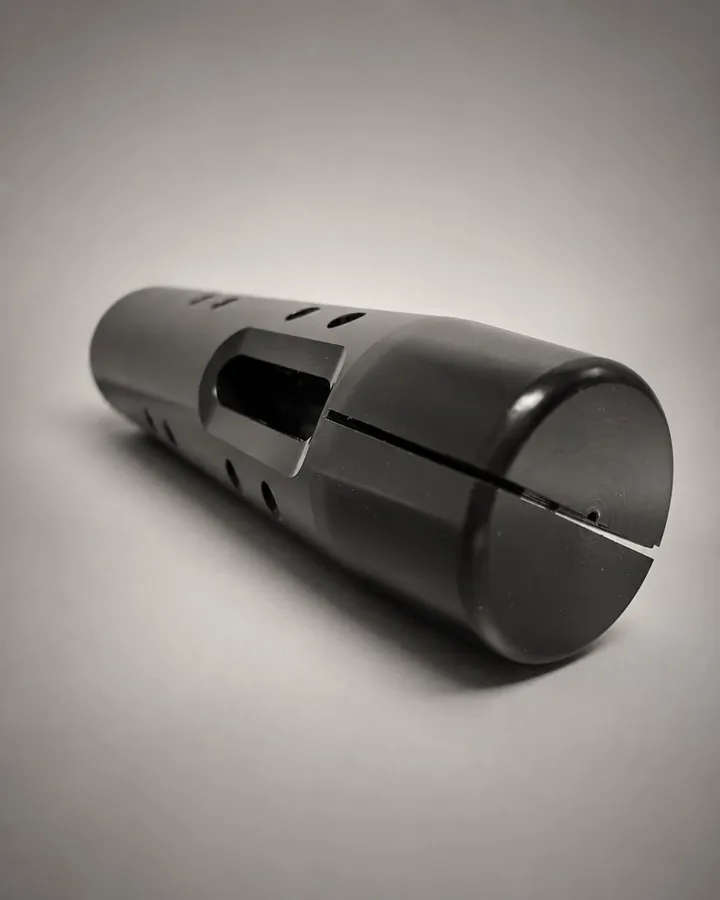
Many parts arrive from the lathe needing features that only a mill can add: a window through the wall of a tube, a slot along its length, a pair of cross holes or a flat for a set screw. On one-off and small runs, these are often quickest to cut on a conventional mill.
The black cylinder shown here was turned first, then given a milled window, cross holes and a split slot so that it can clamp onto its shaft.
For larger quantities of the same part, we move the job to CNC milling so that every piece is identical.
CNC or conventional?
We run both, so we can choose honestly. The right answer depends mainly on quantity, complexity and how soon you need the part.
CNC machining
The machine follows a program written from your drawing.
- Best for batches, where every part must be identical
- Handles complex profiles, contours and hole patterns
- Repeat orders are quick because the program is saved
- Consistent finish and dimensions from first part to last
Conventional machining
A skilled machinist controls the lathe or mill by hand.
- Best for one-offs, repairs and urgent fitting work
- No programming time, so a single simple part can be faster
- Ideal for modifying or re-machining an existing part
- Flexible when the only reference is a worn sample
Conventional milling: common questions
Can you cut a keyway in my existing shaft or pulley?
Yes. Bring the part and tell us the key size, or bring the key, and we will cut the keyway to suit.
Can you modify a part so that it fits my machine?
Usually, yes. We can add slots, holes, flats and steps or remove material so that a part fits. Bring both parts if you can, so we can check the fit.
When would you use CNC milling instead?
When there are several parts, complex profiles, many accurately positioned holes, or features on several faces that must relate closely to each other.
Do you mill plastics by hand?
Yes. Simple features in engineering plastics can be milled manually, especially for one-off parts and adjustments.
Other ways we can make it
Most parts that leave the workshop pass through more than one of these processes.
Have a drawing, a sample or a broken part?
Send it through and we will look at the best way to make it, what it will cost and how long it will take. A clear drawing helps, but a photo with a few measurements is often enough to start.