
CNC turning for accurate, repeatable round parts
Shafts, bushes, nozzles, adaptors and threaded components, turned under program control so the tenth part matches the first. From one prototype to a production batch.

How CNC turning works
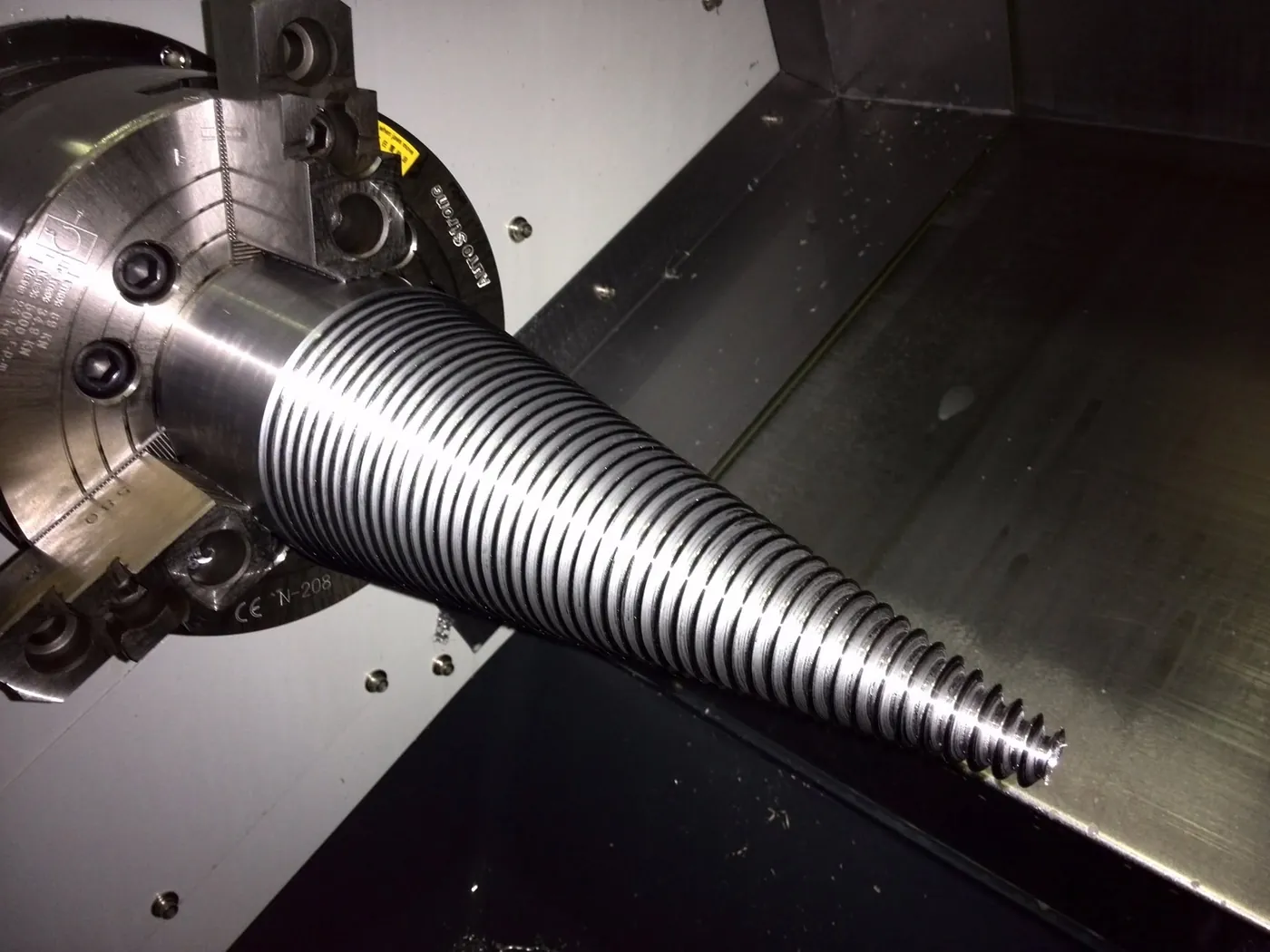
On a lathe the material spins while the cutting tool moves. On a CNC lathe that tool movement is programmed, and a turret holds a range of tools that index into position automatically: one to face, one to turn the outside diameter, one to drill, one to bore and one to cut a thread.
The result is a round part with diameters, tapers, radii, grooves and threads held consistently to the drawing. Profiles that would take a skilled machinist a long time to blend by hand, such as the taper and radius on a filler nozzle, are cut cleanly in a single cycle.
Once a program has been written and proven, repeat orders are fast and the parts are interchangeable with the previous batch. That matters when a machine has a dozen identical nozzles and only one needs replacing.
Parts we turn
If it is round, or mostly round, it probably starts on a lathe.
- Shafts and spindlesDrive shafts, pins and spindles with steps, grooves, keyway flats and threads.
- Bushes, rings and spacersPrecision bores and diameters for bearings, seals and fits.
- Filler nozzles and valve partsStainless profiles with tapers, radii and internal threads for filling machines.
- Adaptors and fittingsThreaded adaptors, nipples and couplings in stainless steel and brass.
- Rollers and pulleysRollers and pulleys in metal or plastic, turned true to their bore.
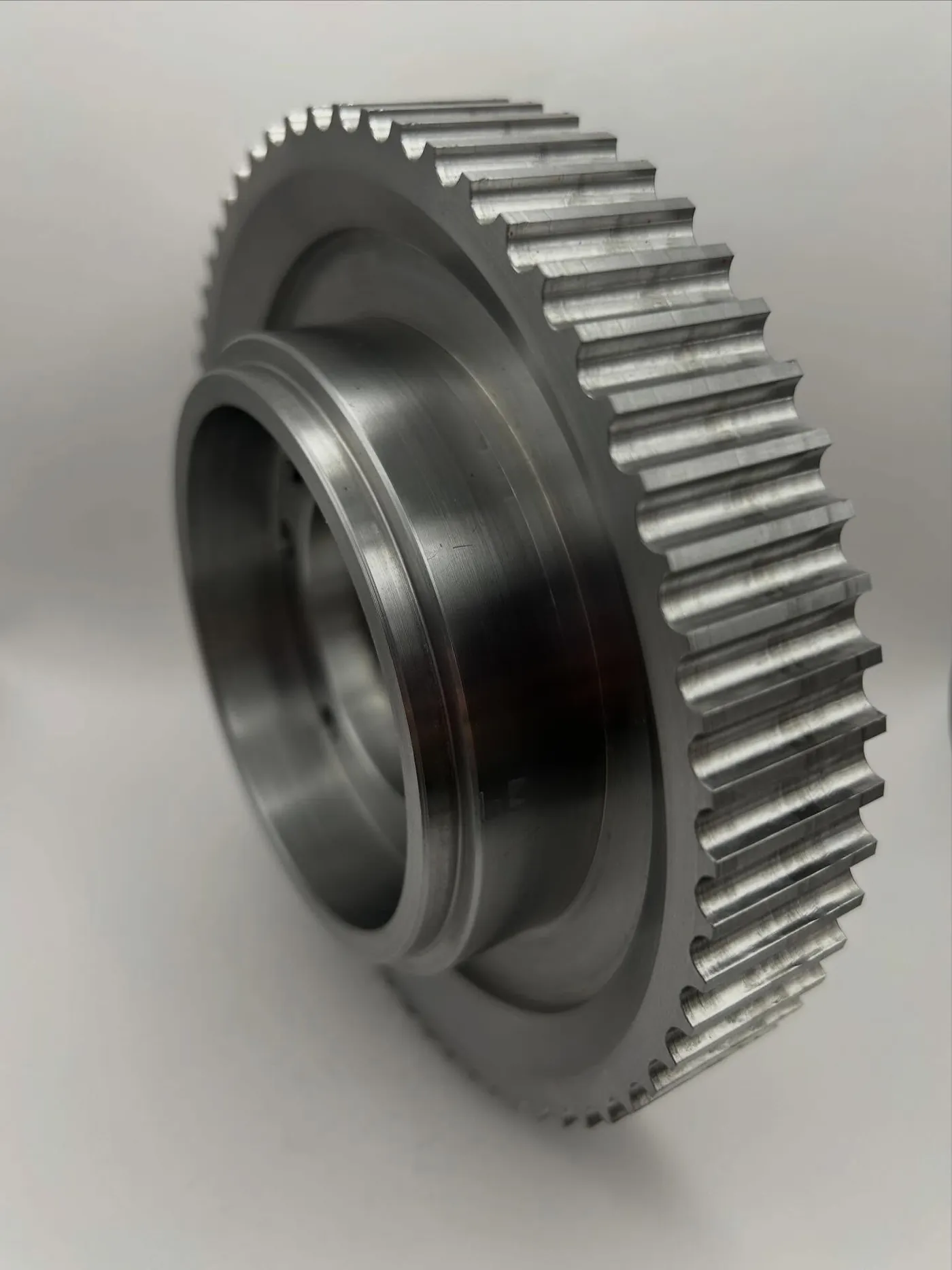
- Hubs and flangesTurned blanks that then go to the mill for slots, holes and keyways.
Stainless filler nozzles
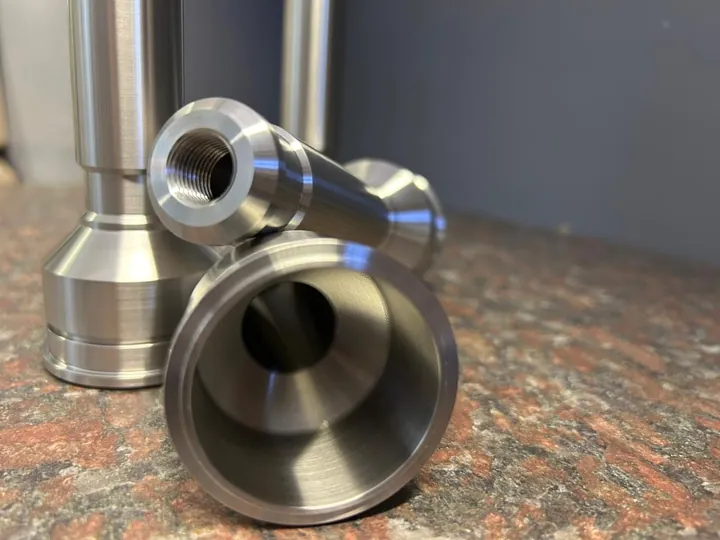
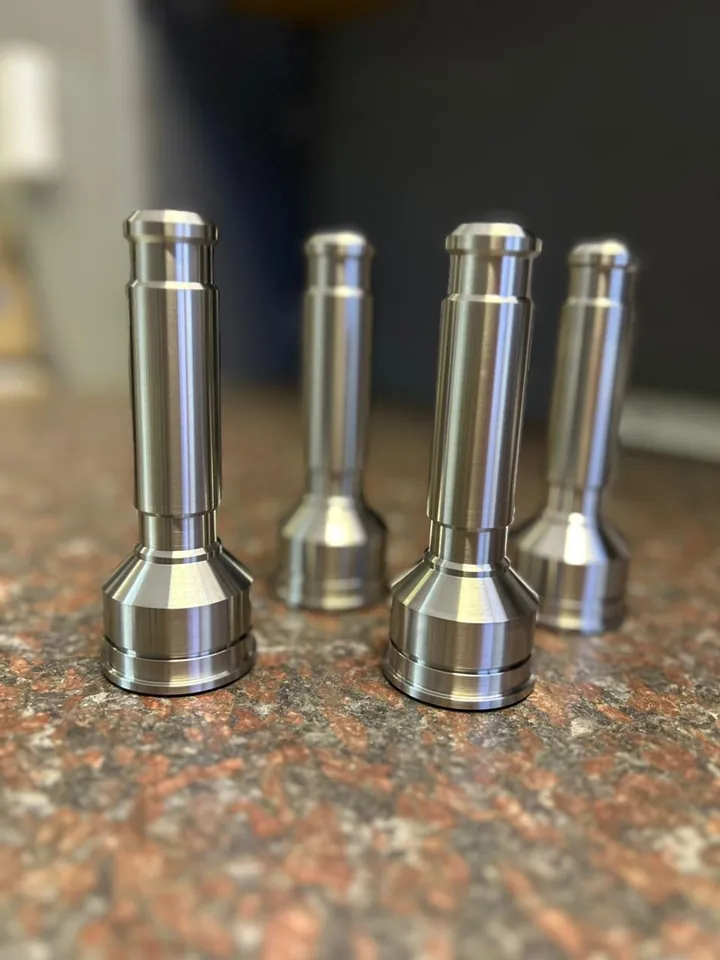
Filling machines in the beverage industry rely on nozzles that seal, centre and pour exactly the same way, valve after valve. These nozzles are turned from stainless steel, with a flared mouth, a precise tapered body, sealing grooves and an internal thread.
Stainless is chosen because it stands up to product, cleaning chemicals and constant washdown. It is also a demanding material to turn well: it work hardens, it is tough on tooling and it shows every mark. A smooth, consistent finish like this comes from correct speeds, sharp tools and a stable set-up.

Turned, then milled
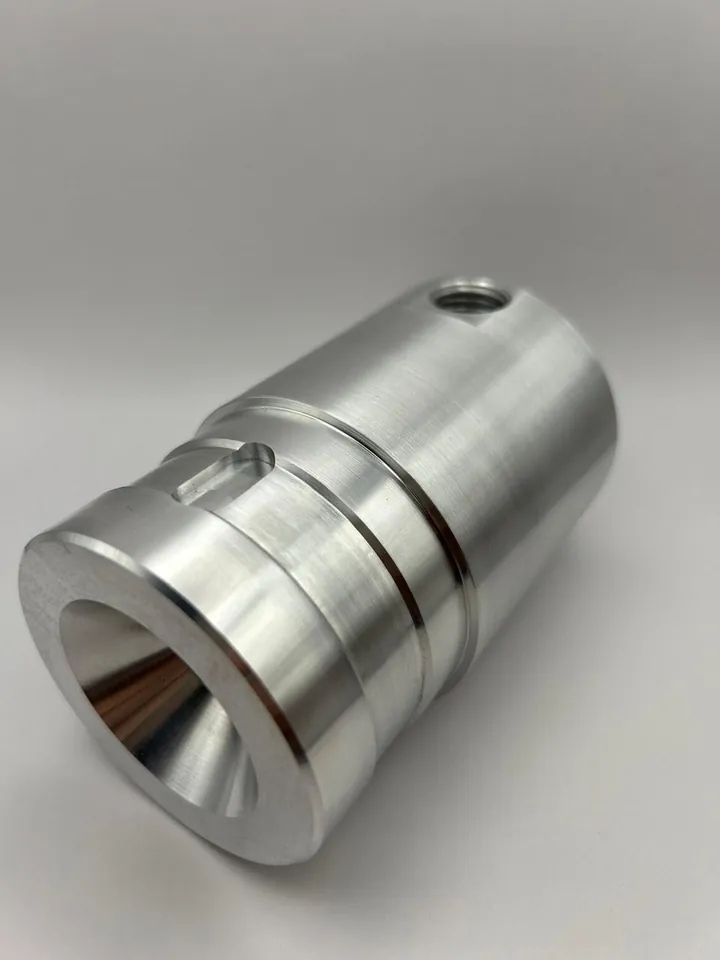
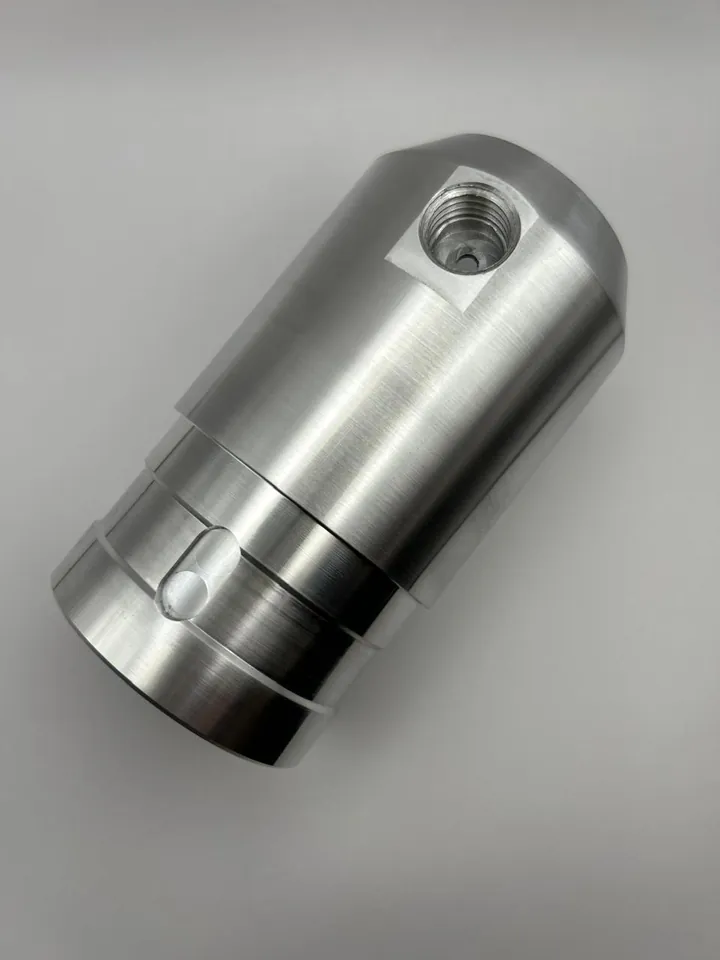
Many turned parts need features that a lathe cannot cut on its own: a flat for a set screw, a slot for a locating pin, a tapped port in the side wall. This aluminium nozzle body was turned to its outside profile and internal cone, then taken to the mill for the slot and the tapped side port.
Because both operations happen in our workshop, the milled features are positioned accurately relative to the turned diameters, and the part is handed over finished rather than half made.
- External and internal diameters, tapers and radii
- Metric and imperial threads, internal and external
- Grooves for O-rings, circlips and seals
- Cross drilled holes, flats and slots added on the mill
Rings, shafts and repeat parts
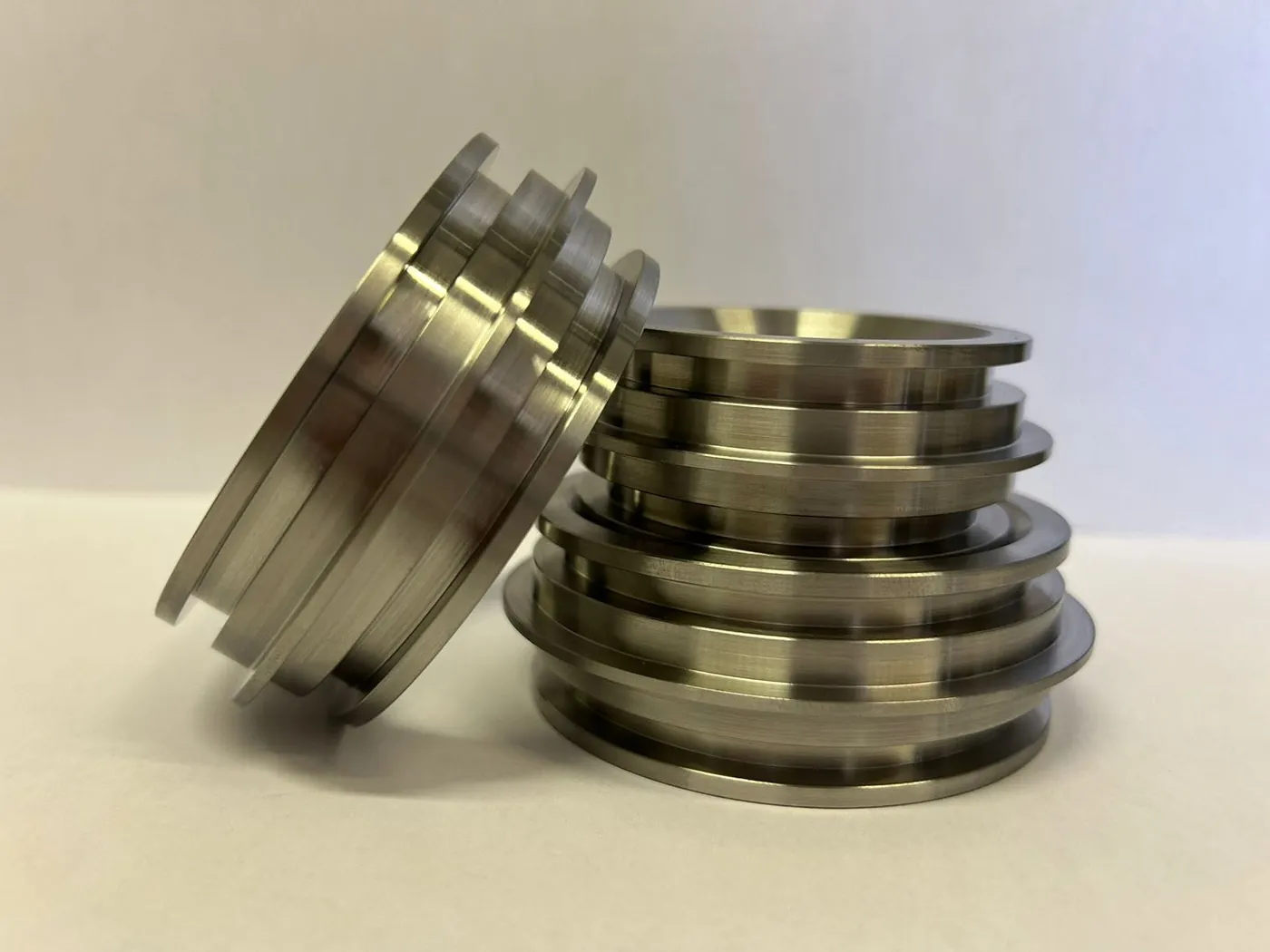
Precision rings and spacers need parallel faces, true bores and accurate outside diameters, often to suit a bearing or seal. Turned on CNC, every ring in the batch measures the same, so they can be used interchangeably on assembly.
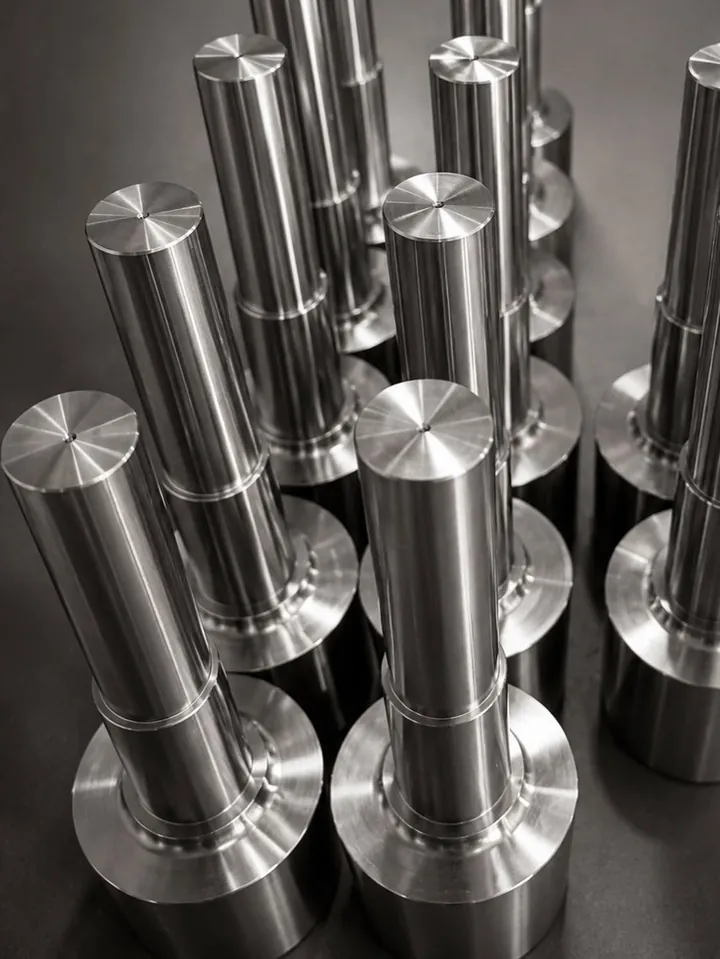
Stepped shafts and cups are another everyday job, often in batches. Each diameter, shoulder and face is turned under program control, so every shaft in the batch fits its bearings and housings in exactly the same way.

CNC turning: common questions
When is CNC turning better than manual turning?
CNC turning is the better choice when you need more than a few identical parts, when the profile includes tapers, radii or complex grooves, or when you expect to reorder. For a single simple part or a repair, conventional turning can be quicker.
What materials can you turn?
Stainless steel, mild and alloy steels, aluminium, brass and bronze, and engineering plastics such as acetal, nylon and UHMW polyethylene.
Can you cut threads?
Yes. We cut internal and external threads on the lathe and can match an existing thread from a sample if you do not know its specification.
Can you make filler nozzles and valve parts for my filling machine?
Yes. Send a drawing or an original nozzle and we will quote to make replacements in stainless steel, matched to the existing set.
Do you keep programs for repeat orders?
Yes. Once a part has been programmed and proven, a repeat order can be run much faster and will match the previous batch.
Other ways we can make it
Most parts that leave the workshop pass through more than one of these processes.
Have a drawing, a sample or a broken part?
Send it through and we will look at the best way to make it, what it will cost and how long it will take. A clear drawing helps, but a photo with a few measurements is often enough to start.